Possessing Delta-8 in Texas Is Now a Felony. Whether THCA Flower Is Legal Depends on Who You Ask.
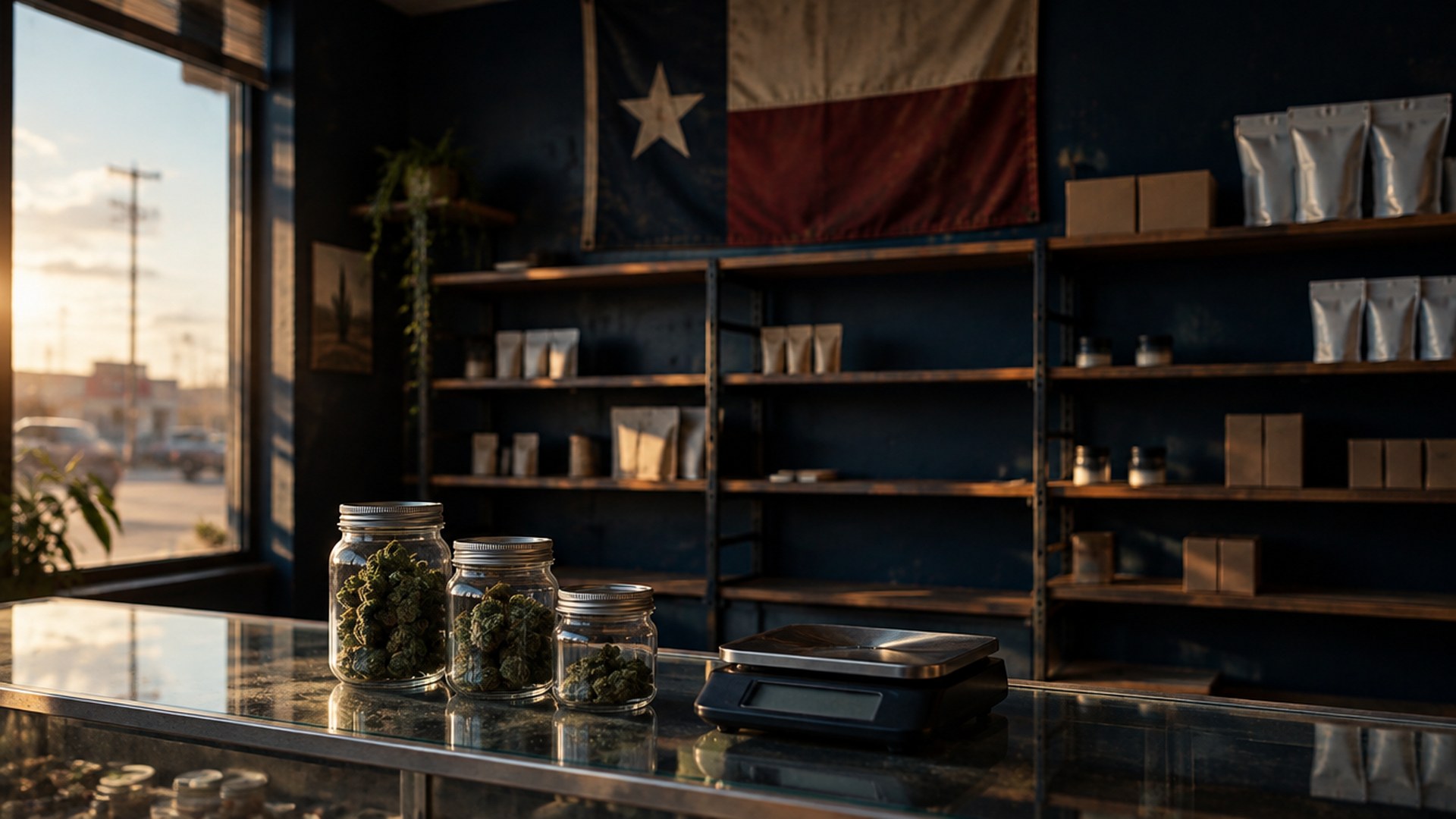
Since July 31, possessing delta-8 in Texas has been a state jail felony, punishable by 180 days to two years in jail and a fine of up to $10,000.
By Greg Silverstein (@sourcatjack) for @newyork420week
Since July 31, possessing delta-8 in Texas has been a state jail felony, punishable by 180 days to two years in jail and a fine of up to $10,000. The state put delta-8, delta-10, THCP and other non-delta-9 THCs on its Schedule I list, alongside heroin and LSD.
THCA flower, the product most smoke shops built their shelves around, is murkier. A separate state rule bars stores from selling it, but no agency will say whether simply carrying it is a crime, and police departments a few miles apart are giving opposite answers. All of this is landing on more than 14,000 registered hemp retailers, weeks before a federal ban takes effect on top of it.
About the numbers: penalties and retailer counts come from the Texas Department of State Health Services (DSHS), Austin police and reporting by the Texas Tribune and KUT. Court dates come from court filings and the Texas Hemp Business Council's case tracker. Status as of October 11, 2026. This is reporting, not legal advice.
How Texas got here
Texas legalized hemp in 2019 with the same test as federal law: cannabis with no more than 0.3% delta-9 THC by dry weight. Shops filled the gap with delta-8, most of it made by chemically converting CBD, and later with high-THCA flower that tests under the delta-9 limit but gets users high once it's heated.
The state health department tried to list delta-8 and similar THCs as Schedule I drugs in 2021. Hemp companies sued, and a Travis County court blocked the rule in November 2021. That injunction kept delta-8 legal for nearly five years.
The Legislature tried to ban hemp THC outright in 2025. Gov. Greg Abbott vetoed that bill, SB 3, in June 2025, and two special sessions ended without a replacement. Instead, Abbott issued an executive order in September 2025 that set the buying age at 21 and required ID checks. The Texas Alcohol and Beverage Commission made those rules permanent in January 2026.
Then the courts moved. On May 1, 2026, the Texas Supreme Court reversed the 2021 injunction, and DSHS reinstated its Schedule I definitions effective July 31.
What's now a felony
The reinstated rule covers every THC found in hemp except delta-9 at or under 0.3%, plus "synthetic equivalents" of cannabis compounds. DSHS didn't publish a list of banned products by name, saying those terms aren't internationally standardized. Delta-8, delta-10 and THCP are covered. The police departments and sheriff's offices KUT surveyed all agreed that possessing delta-8 is a felony.
For stores, selling those products can cost them their state hemp license, bring fines of up to $10,000 per violation, and open the door to charges for distributing a Schedule I substance. Industry experts told the Texas Tribune the reclassification could pull 60% to 90% of THC products off some shelves. Stores that sell mostly natural delta-9 products expect to lose less. Austin-based Hometown Hero said delta-8 was about 5% of its sales.
What's still legal: delta-9 THC products at or under 0.3% by dry weight, including gummies, drinks and tinctures, sold to buyers 21 and over. THC vape pens were already banned by the Legislature.
The THCA question
THCA is the acid form of THC. Raw, it doesn't get you high. Heat it with a lighter or a vape and it turns into delta-9. Under the 2019 law, a flower could be high in THCA and still count as hemp as long as its delta-9 tested under 0.3%.
DSHS closed that gap for sales in March. Its new rule, in effect March 31, counts 87.7% of a product's THCA toward the delta-9 total, which makes nearly all high-THCA flower and concentrate noncompliant to sell. The same rules raised annual license fees to $5,000 for retailers and $10,000 for manufacturers.
The industry sued. A Travis County judge blocked the rule in April and May, but the state appealed, and on June 5 the Fifteenth Court of Appeals let DSHS enforce it while the appeal goes on. The appeal hadn't been argued as of mid-September, so the rule is enforceable but its legality is unresolved.
Possession is a separate question, and nobody official will answer it. A DSHS spokesperson told KUT the agency "does not regulate the possession" of hemp products and referred questions to police. When KUT asked law enforcement in September, it got this:
| Agency | What it said about possessing THCA flower |
|---|---|
| Austin Police | Still legal. No seizure or arrest for products at or under 0.3% delta-9 |
| Round Rock Police | Suggested it would be a felony |
| Hays County Sheriff | Said THCA "will not be legal," but also that anything under 0.3% delta-9 is |
| Travis County Sheriff | Up to the deputy, case by case |
| Kyle Police | Case by case, officers may test products |
| Dallas Police | The state's formula "does not state it's automatically illegal" |
| Fort Worth Police | Under 0.3% delta-9 is legal to possess. Didn't address THCA directly |
| Texas DPS | "Legality is determined by the courts" |
Austin and Round Rock share a border. Travis County District Attorney José Garza told KUT that "the risk for arrest is real" and that enforcing the law will be very hard given how unclear it is.
The legal argument against the state is that a hemp law passed by the Legislature counts THCA as hemp, and an agency rule can't override a statute. The state hasn't conceded that. At oral argument in the delta-8 case, a Texas Supreme Court justice asked the state's lawyer whether THCs that occur naturally in hemp fall outside the controlled-substance definition, and didn't get a direct answer.
The court cases still open
- Texas Hemp Business Council v. DSHS (Fifteenth Court of Appeals): the challenge to the March total-THC rule, fees and transport limits. The rule stays enforceable until the court rules. A written opinion often takes months after argument.
- Federal case in Galveston: two hemp retailers and a distributor sued DSHS, Attorney General Ken Paxton and Galveston County officials, arguing the ban conflicts with the 2018 federal farm bill and burdens interstate commerce. U.S. District Judge Jeffrey Brown denied an emergency restraining order on August 9, finding they hadn't shown irreparable harm. Their request for a preliminary injunction is still pending.
- Monti v. Garcia: a separate federal lawsuit filed July 31 that cites THCA as evidence the state rules conflict with federal law. It's at an early stage.
What's coming
The federal ban lands on top of the state one. Congress redefined hemp in the November 2025 funding law to count total THC, THCA included, and capped finished products at 0.4 milligrams of THC per container. Synthetic and converted cannabinoids such as delta-8 lose federal hemp status on November 12. The rest of the federal ban, which reaches most delta-9 gummies and drinks still legal in Texas, takes effect December 11 after a 30-day delay Congress passed in September.
The Legislature meets again in January 2027. Sen. Charles Perry, R-Lubbock, who wrote SB 3, has said he'll file another bill to ban consumable hemp THC.
Until a court rules on THCA, carrying it in Texas comes down to which county you're in and which officer stops you.
Sources
- Texas Tribune, "Delta-8 among products banned as Texas THC suit continues," Aug 10, 2026
- Texas Tribune, "What is still legal under Texas' latest THC ban," Jul 30, 2026
- KUT, "Is possessing smokable hemp flower still legal in Texas?", Sep 15, 2026
- KUT, Austin police on delta-8 felony enforcement, Jul 28, 2026
- KBTX, "Here's what you need to know about Texas' newest THC ban," Jul 31, 2026
- Houston Public Media, "Texas rule targeting smokable hemp is back in effect," Jun 10, 2026
- Texas Hemp Business Council, "THBC v. DSHS: where the lawsuit stands"
- Texas Tribune, TABC hemp rules finalized, Jan 20, 2026
- Office of the Texas Governor, executive order GA-56
- NORML, federal hemp ban delay signed, Sep 3, 2026