
Genuine Grow Is Small-Batch Cannabis Made in Montclair
Andrew Marshall of Genuine Grow in Montclair, NJ, on licensing, the 8 Inch Bagel, rosin collabs, an under-canopy light trial and why he holds back batches.
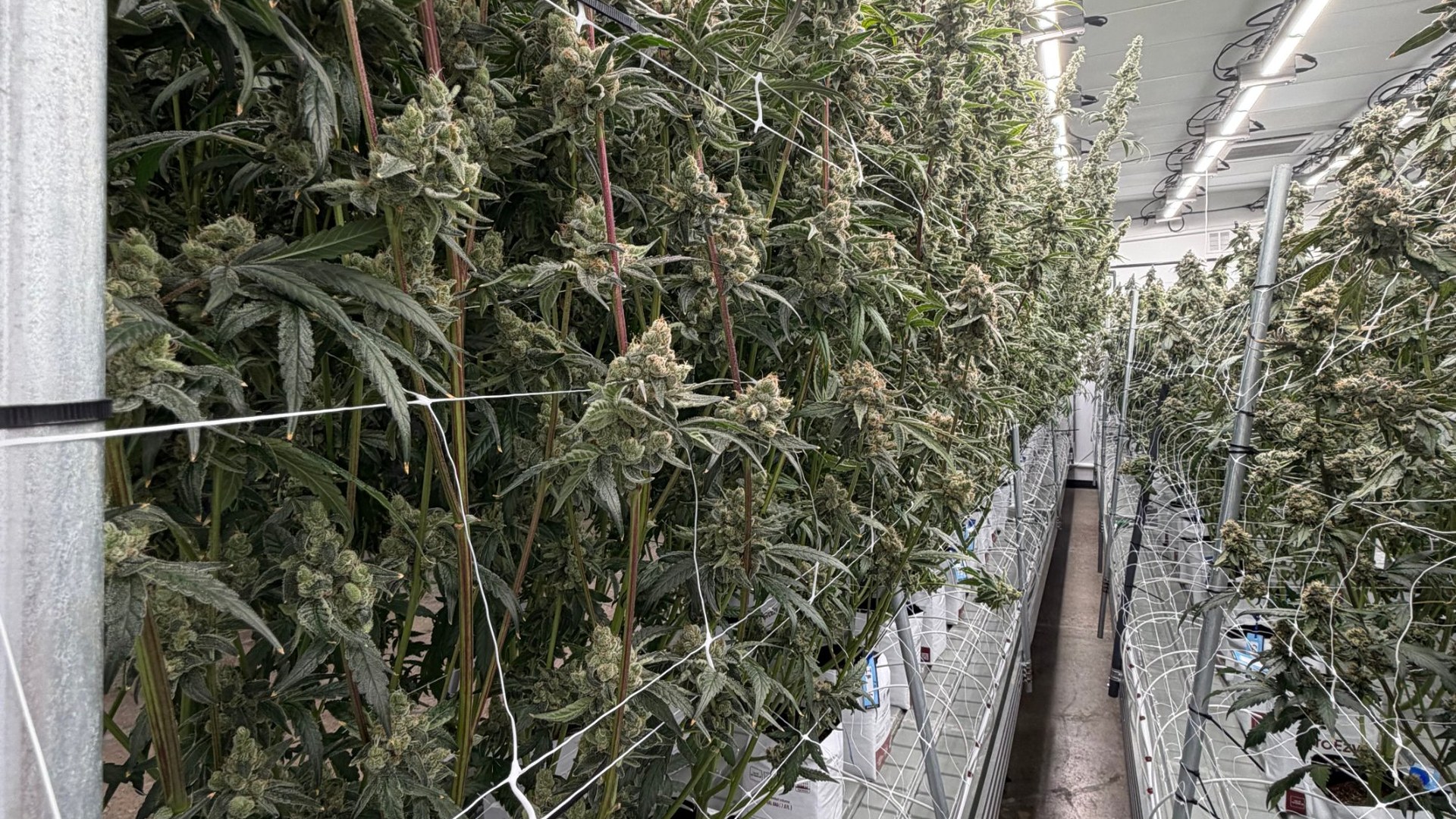
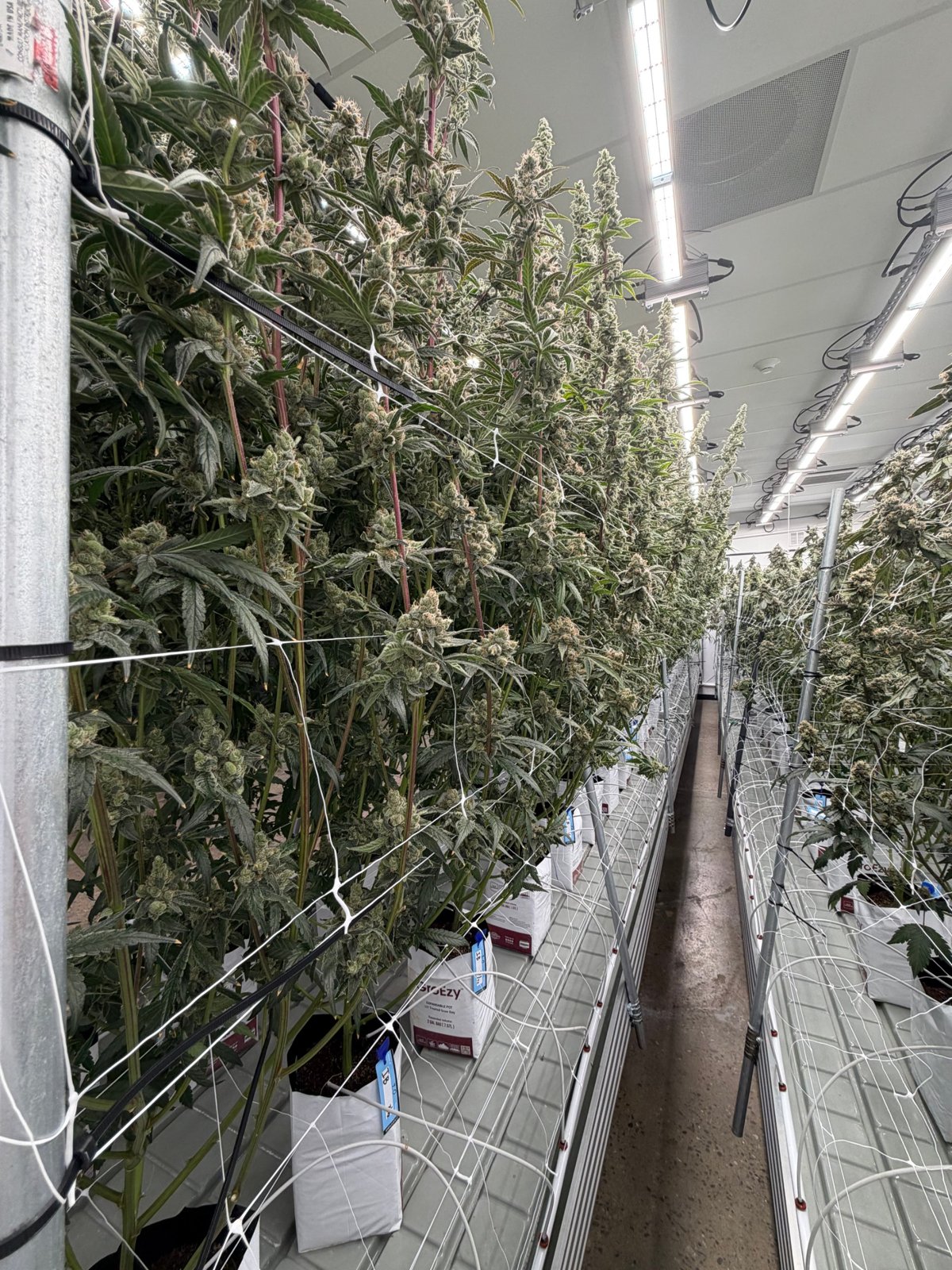
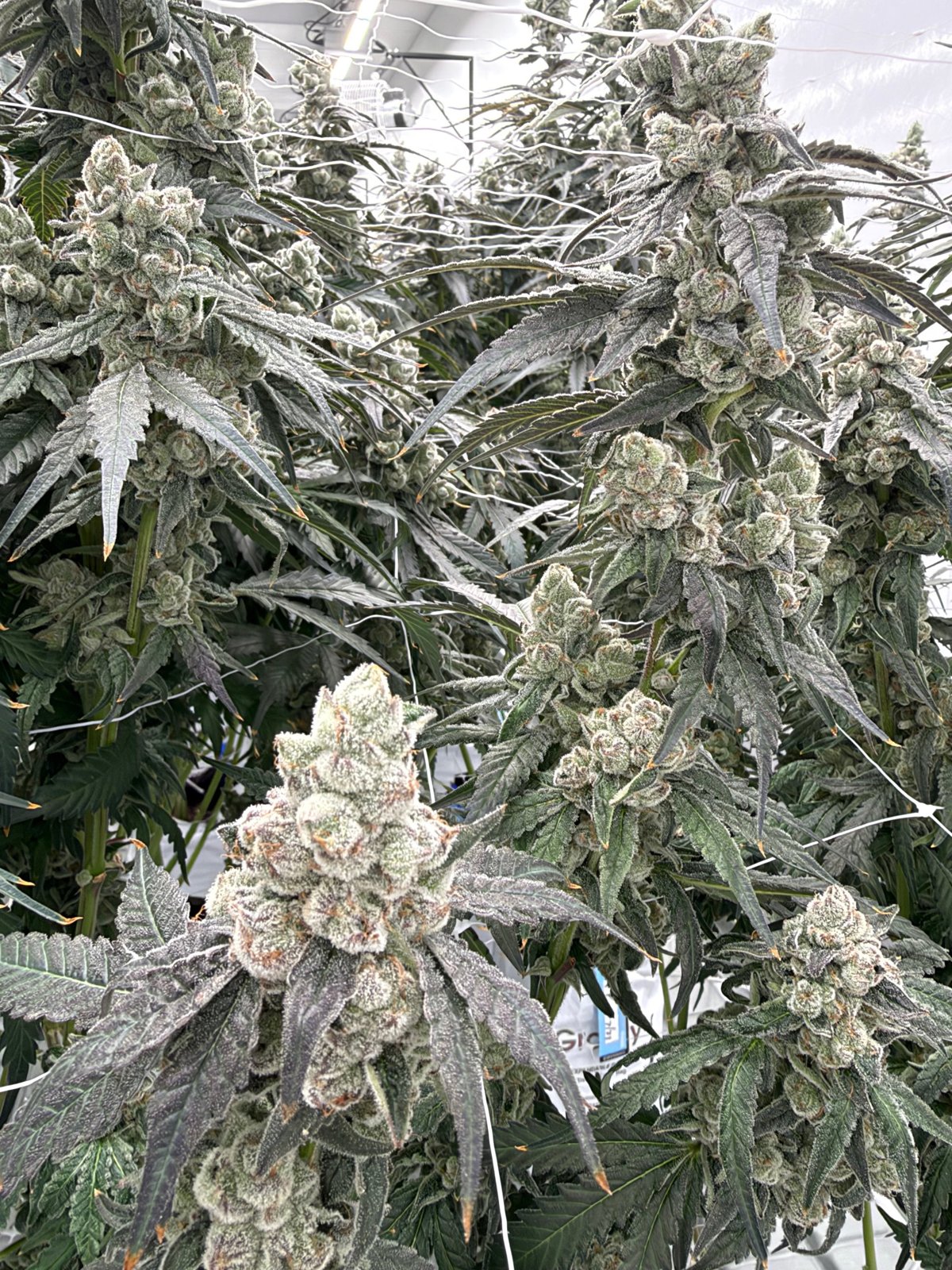
Andrew Marshall's Genuine Grow runs about 140 flowering plants in a single room in Montclair, with one full-time grower and one part-time employee.
Marshall spent 10 years in TV production before applying for the license himself, and his best friend Michael "Tito" Sirianni grows the plants. Almost a year in, they sell flower and cold cure rosin in 12 to 14 New Jersey dispensaries, hold back any batch that doesn't meet their standard, and are running their first pheno hunt. We talked about the 8 Inch Bagel, an under-canopy lighting trial, and why he thinks small growers are winning.
The interview
GREG: I'm here with Andrew Marshall from Genuine Grow. You guys are based in Montclair?
ANDREW: Yes, sir.
GREG: How did you get into growing, and how long have you been at it?
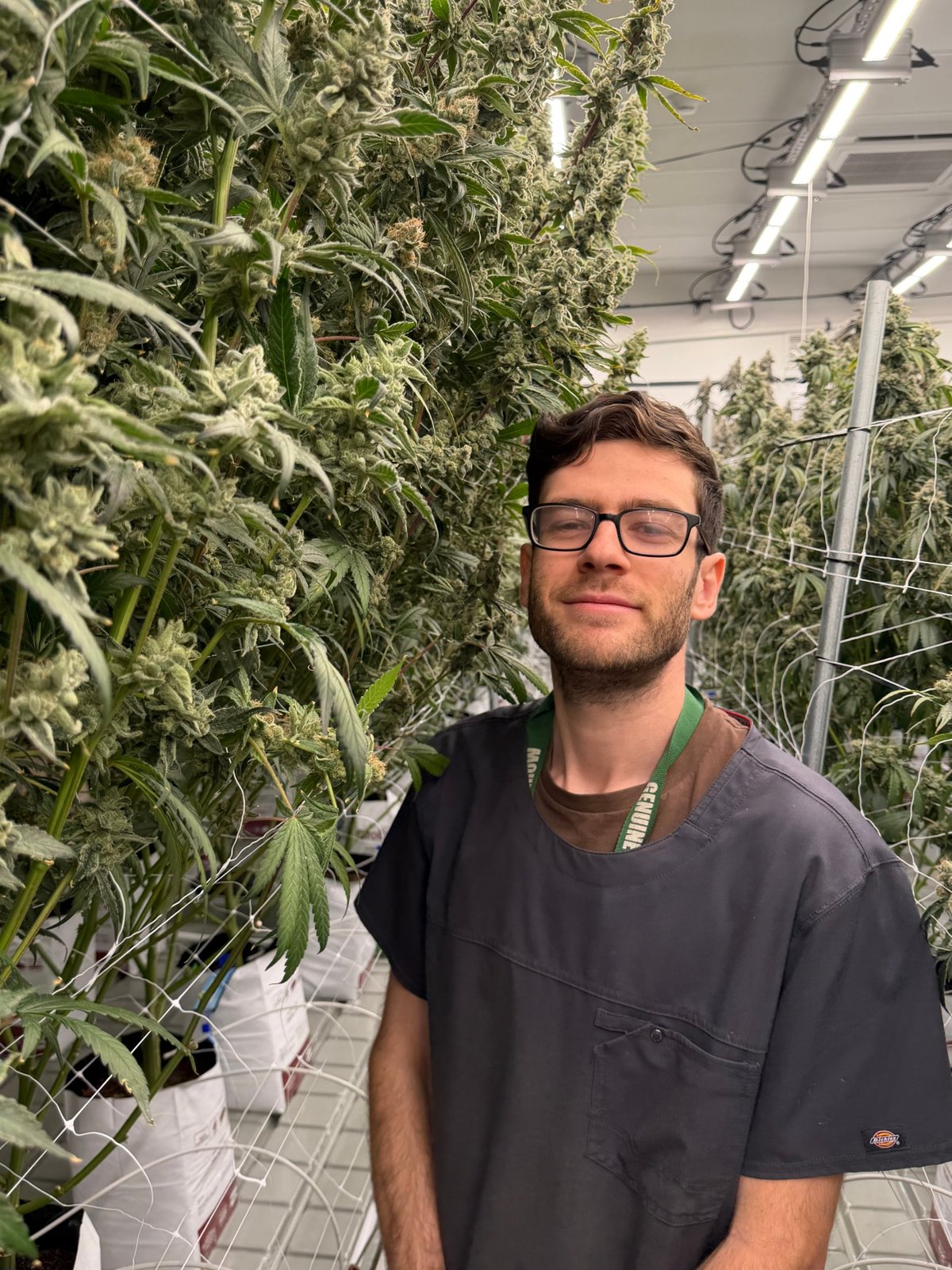
ANDREW: I personally didn't come from a growing background. I was in the TV and production industry for the last 10 years, and that branched into wanting to have my own business, and that began the whole licensing process. My best buddy, Michael "Tito" Sirianni, is really the grower behind this. I just took the idea and brought it to life.
GREG: How did you get into the license side of the industry? Did you hire a lawyer?
ANDREW: The whole process was already rooted in what I was doing in the TV production world, which was a lot of compliance and logistics. I filled out the paperwork to apply for the license. I was doing a lot of paperwork and admin at my previous job in TV and production, and I applied that work to the application and regulatory side of things, getting the license, and now actually running the business.
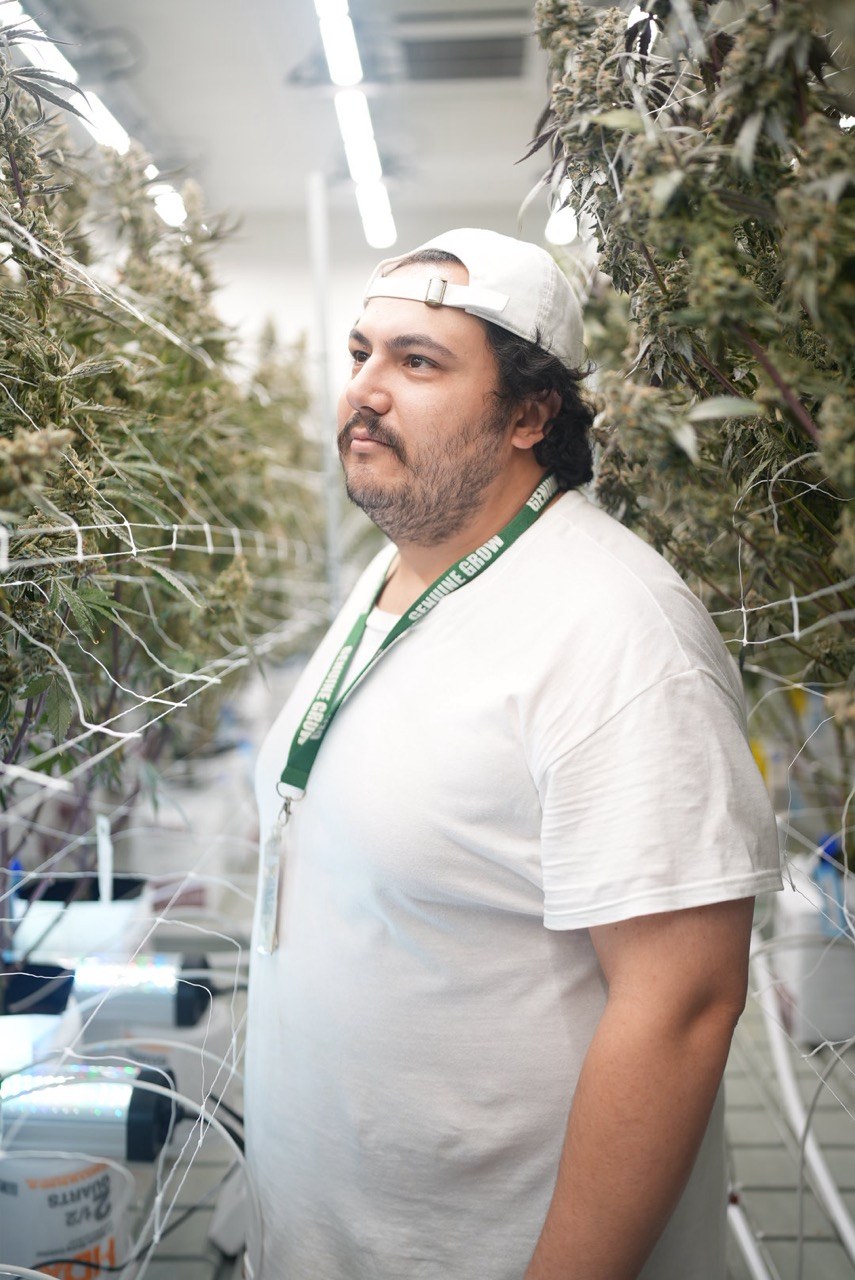
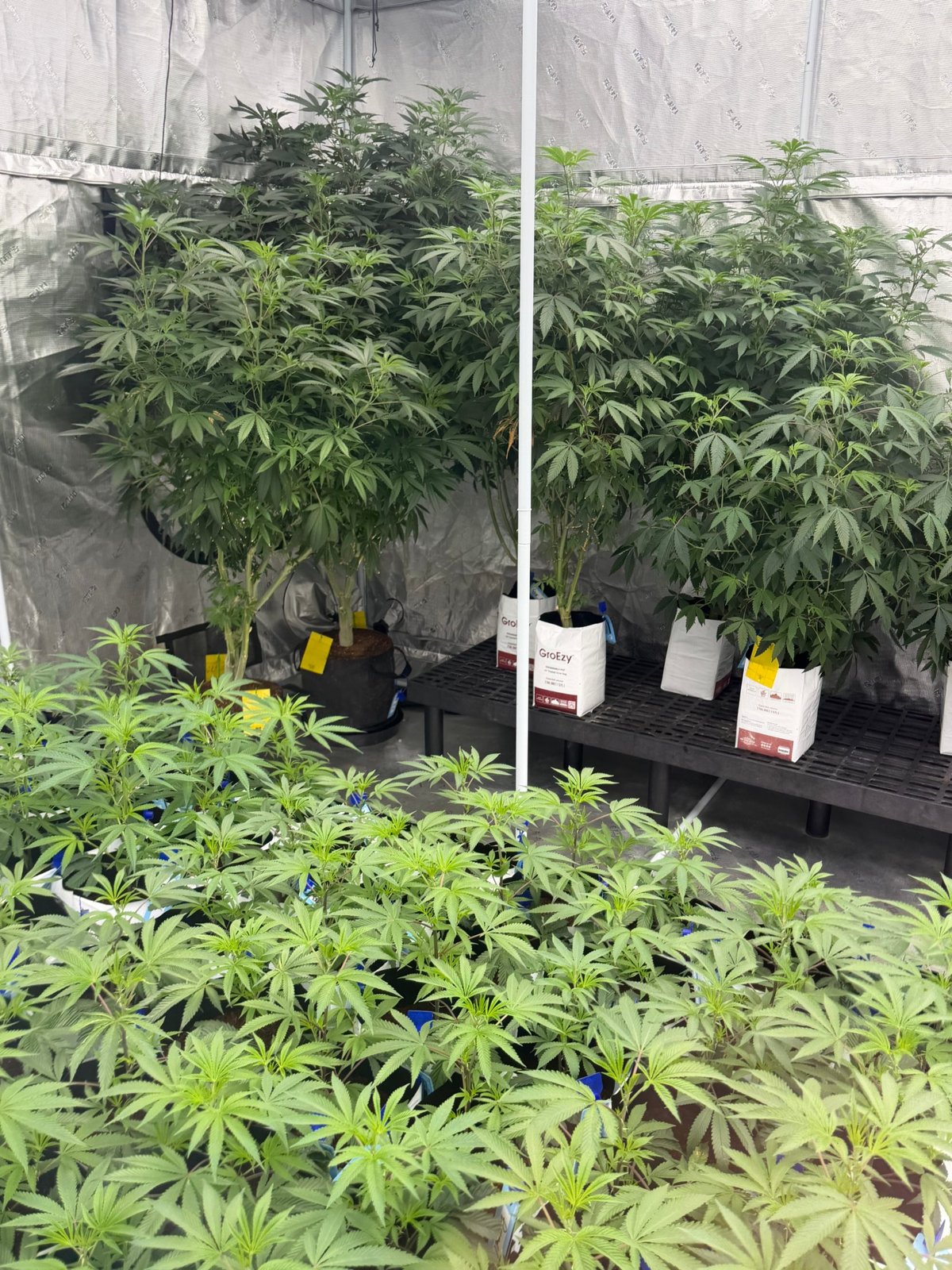
I really just have one full-time employee, Michael "Tito" Sirianni, my grower, and one part-time employee. So I do most of the packaging, trimming, sales, deliveries, and account management. That's pretty much my domain day to day. I also handle the marketing, social media, and pop-ups. Michael "Tito" Sirianni stays with the plants mostly: feeding the plants, managing temperatures and irrigation schedules. We hand-mix the nutrient batches daily.
GREG: And you said you hand-water the moms?
ANDREW: We hand-water the moms. Flowering plants are on drip irrigation. Everything's managed from our phones, but we have to make the recipes by hand, physically, every day.
GREG: And your dad comes in to help with harvest?
ANDREW: Dad comes in to help with harvest. We only have four people badged right now. We have about 130–140 plants in there right now, and a percentage goes to fresh frozen each time.
GREG: Who's doing the washing? Who's the processor on the hash?
ANDREW: We've worked with a couple of different people. We did a collab with Harvest Works Farms. They did our Superboof run and a run of the Mule Fuel. Now we've been working with Brookside Reserve for our most recent rosin collabs: the Pomelo Punch, the Soureen, which is an Irene and Sour Diesel cross [Genuine Grow is also running Soureen in flower], a Superboof wash, and a wash of the 8 Inch Bagel. That was phenomenal, very gassy and loud.
Rosin is a good way to get our name out there and showcase our genetics in a different way.
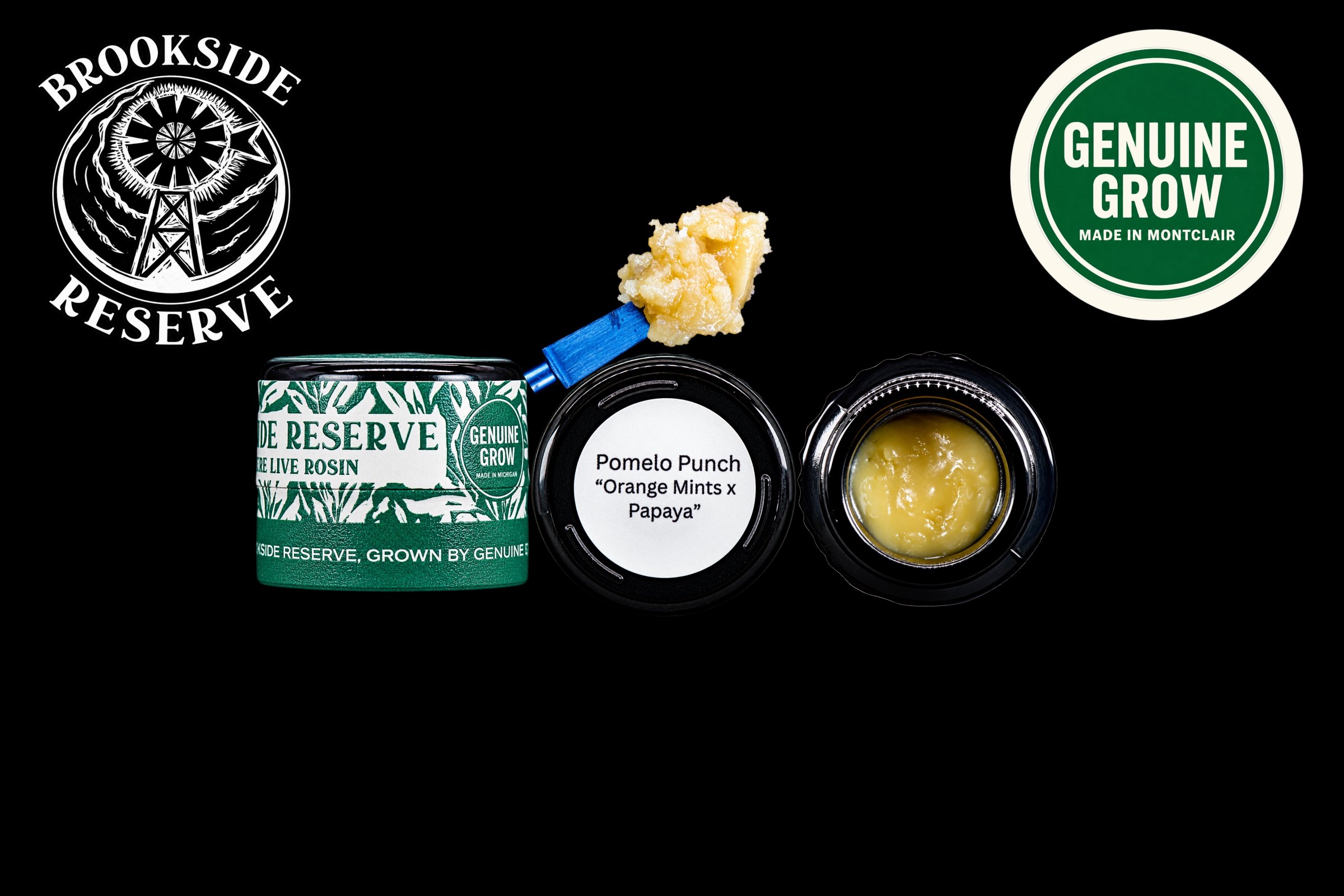
What's cool is, if I freeze half a table for fresh frozen and send the other half to dry, then between the drying, curing, and trimming on one side and the washing, testing, and curing on the other, the two products can hit the market at almost the same time. I dropped the 8 Inch Bagel flower, and that week the 8 Inch Bagel rosin was on the same shelf at the same stores. It's cool to see the expression of one strain in both dry flower and cold cure rosin, and customers can buy one of each.
GREG: You mentioned the 8 Inch Bagel. What other strains are you growing right now?
ANDREW: We started with about 8 or 10 strains and have since pulled a couple. We got rid of the Tropicana Cherry. It's a pretty strain, and I love the citrus personally, but it's a little overplayed and doesn't test that well, so it's hard to sell. From a business standpoint I had to cut it, even though it's a great sativa and everyone wants sativas.
We had the Golden Goat, which everyone loves, but it doesn't test high and doesn't yield as well as some of the others. We hit 24% on it, and then it hit as low as 10%, so I had to get rid of it.
GREG: The percentage is something a lot of the community doesn't love to focus on.
ANDREW: I'll smoke 9% all day, but no one is buying 9% flower.
GREG: I've had 9–10% that hits better than a 30%, because it has the terps and the other cannabinoids.
ANDREW: The Golden Goat has probably our best terps. It's straight-up lemon cleaner gas, literally like lemon Windex. It's just not the right strain for commercial purposes, which is probably why you don't see it often.
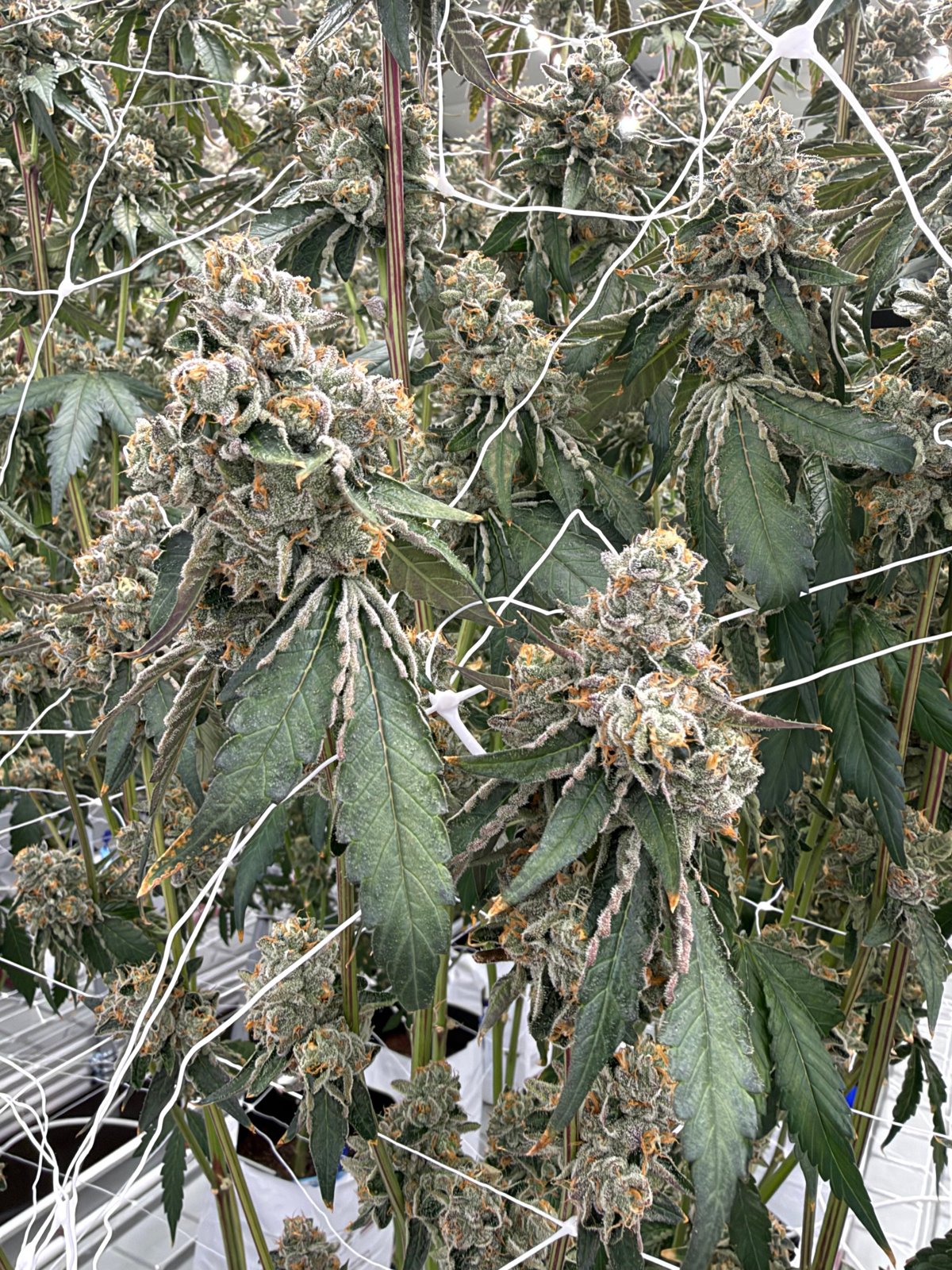
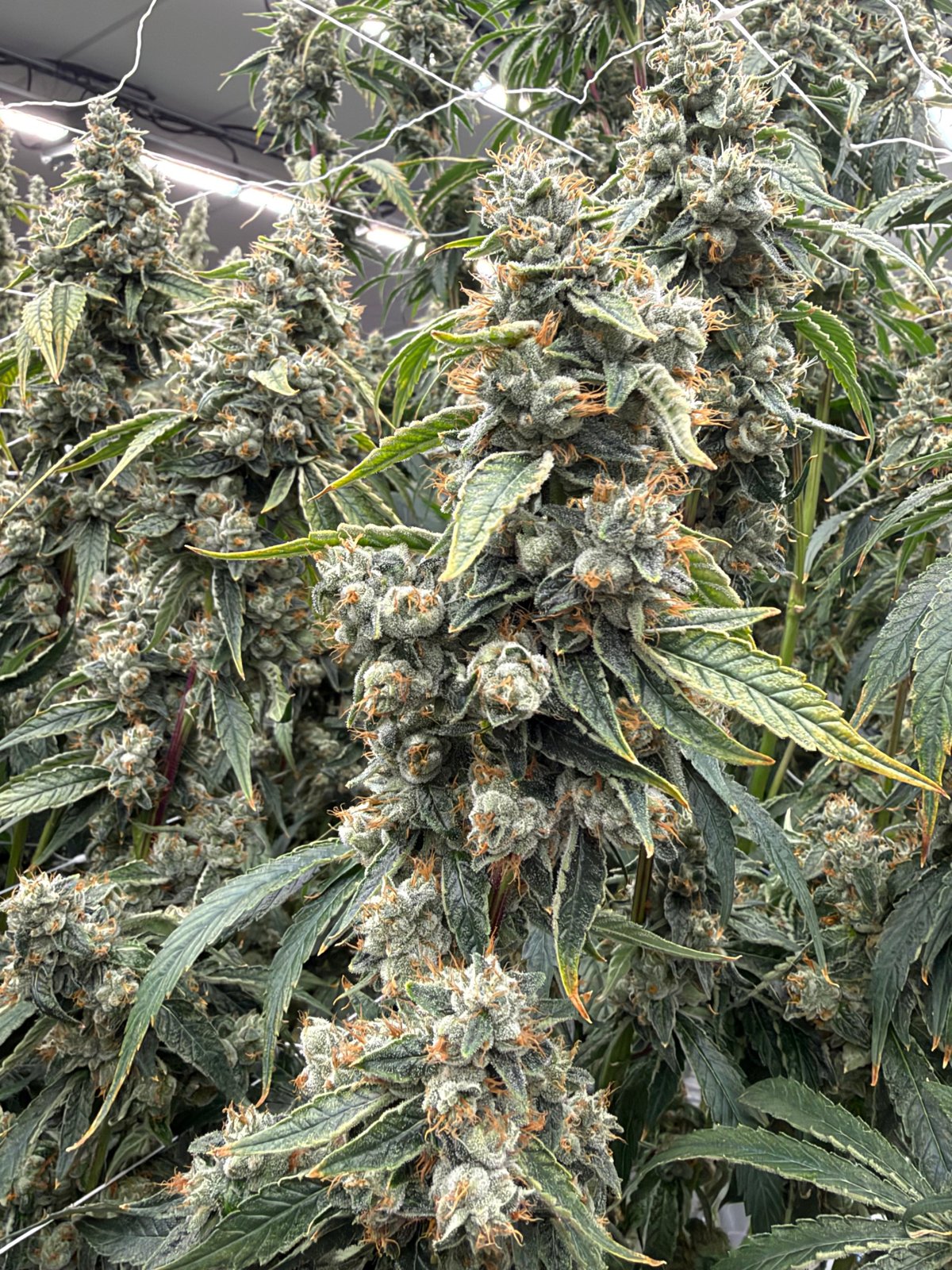
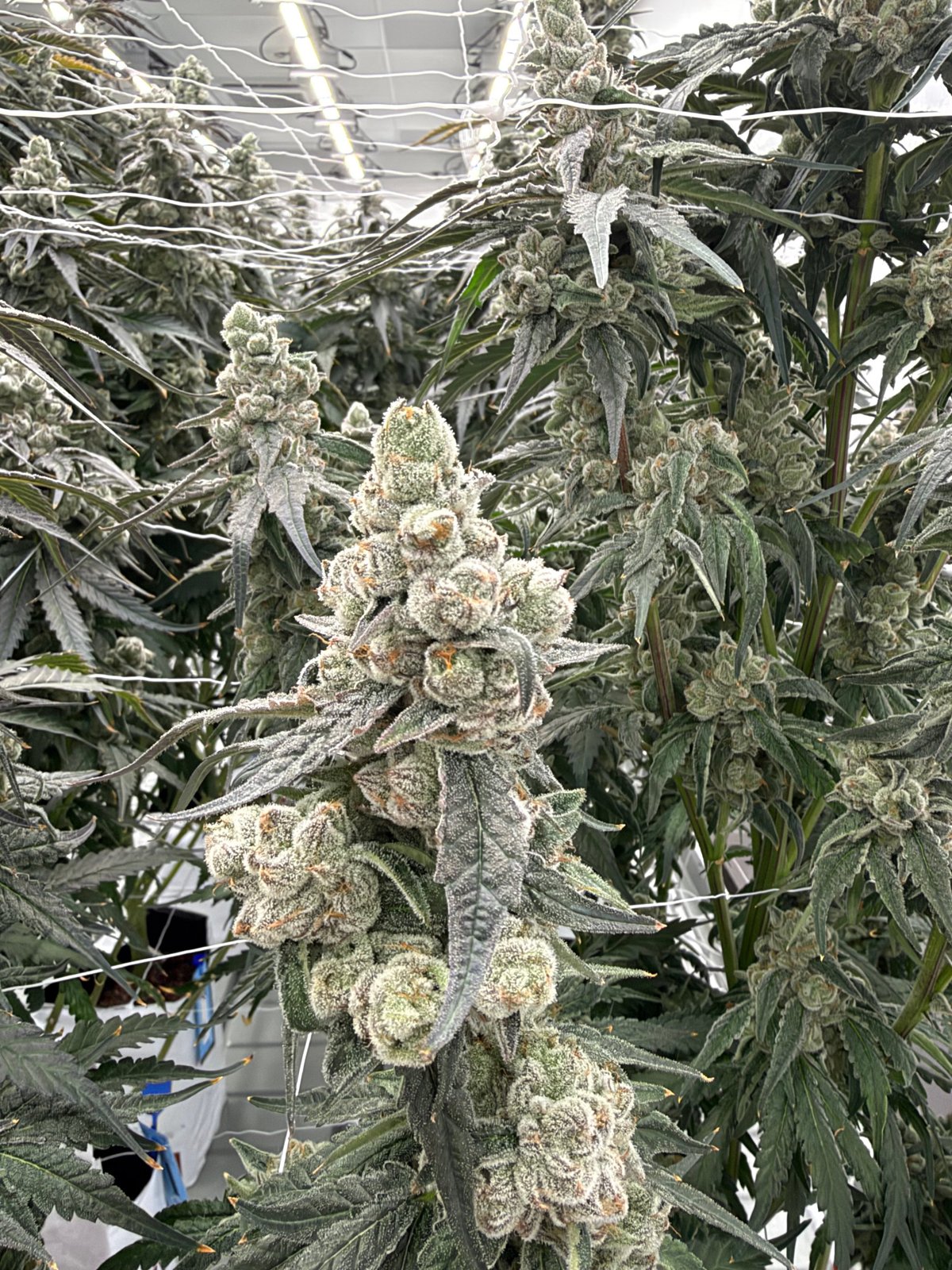
So we're focusing on what works for us. The 8 Inch Bagel, a GMO cross, is undoubtedly our number one. It tests high, has good terps, a great yield, and good bag appeal. It checks every box. Big structure, it did decent in the wash, and it puts out a lot of A buds, not a lot of smalls and larf. The way it grows, light penetrates to the bottom really well. I think it should win a couple of awards.
GREG: You're one of the only people with that in Jersey right now, right?
ANDREW: I know EV Farms down south had the 8 Inch Bagel, funnily enough from the same source we got it from, just by coincidence. But no one else grows it in Jersey right now.
We've got the Mercy. We're running the Island Blend [(Banana OG x Cherry Pie x Tangie) x Guava Cooler] from Bloom Seed Co, and the Pomelo Punch from Bloom. I've got Tallymon, Too Much Lime [both from Bloom Seed Co], and Sour Headband coming. It's been almost a year of growing now, so I'm retiring some strains and venturing into new ones: keeping the core, like the 8 Inch Bagel gas, but getting newer fruity, tropical terps, and trying to find a couple more sativas. We don't want too many indicas. The Sour Diesel you saw, we're still testing to see if it works commercially before dedicating real estate to it.
GREG: So you're growing between 10 and 20 varieties at a time?
ANDREW: In our library, yes, but at one time probably around 8 strains. We try to monocrop each table to one strain, but it never works out how you plan. There are always a couple of misfits on a bench, as we call them.
GREG: And 140 flowering?
ANDREW: 140 flowering plants. We have almost 200 plants in veg right now, but we don't put all of them on the beds. We save some for future mom stock and extras, just in case. It's about figuring out how many plants fit on a bench without compromising quality and usable yield. If we fit double the plants, that doesn't mean better or more yield. We need as many top A's as possible, and if the plants are congested, the light isn't hitting all the colas.
GREG: So you're picking strains based on terps and yield?
ANDREW: It's also based on lineage, and finding what other people don't have and what can be unique to the market. If an MSO grower has Pomelo Punch, that doesn't rub me the wrong way. MSOs have tons of strains, and that's not real competition to me. But if someone in the same small-batch category was growing a strain, I'd probably stay away from it. I wouldn't want to grow the same strain as a fellow small-batch grow.
Everybody's got GMO crosses, and GMO has been run to death in New Jersey, but the 8 Inch Bagel is a unique one, so we've been running it pretty hard. Same with the Mercy, which is an old-school Kush three-way cross. And like I said, we want more tropical terps, like the Pomelo Punch and the Island Blend, which have pretty unique profiles with some banana and pineapple.
GREG: You mentioned you're doing a pheno hunt right now. Tell me about it.
ANDREW: We started our first pheno hunt. We originally started with cuts from a couple of different sources, which I think is how most people start. Unless you've been pheno hunting in your basement for 20 years, which we have not, you start with trusted, clean, verified cuts. Once we got our feet in the door, we said, let's start popping what we have.
We have a ton of seeds, and we're accumulating more ahead of the federal seed ban in December. Around March or April we popped our first seeds, just one pack, because we're limited on space. Now we've got four phenos coming close to their first harvest in flower. We'll split them between dry flower and fresh frozen to see if any are potential washers, see how the dry flower comes out, and evaluate them for future production based on what's best for our business and the consumer.
GREG: You're growing indoor. What's your grow method and medium?
ANDREW: We grow in coco. A lot of people talk poorly about salts, saying "cardboard terps" and so on, but we've found the exact opposite. The terps are loud, the smoke is good, and it's a recipe you can follow. Stick to the recipe and you get the results you want to see from the plant.
GREG: Some of the best growers I know use those nutrients.
ANDREW: We run Athena. The anti-salt people talk a lot of crap about it.
GREG: Plenty of people doing living soil grow terrible weed.
ANDREW: The conversation has always been that you don't get the same yield with living soil as with salts, but I think it depends on your genetics and how you grow. We've seen plants not yield at all because of whatever factors stressed them out. Nutrients are definitely a big cost, but there's less to deal with compared to living soil. We put the plants in coco blocks, throw the blocks out at the end of harvest, start with new blocks each run, and repeat the regimen over and over. It works for us.
We have one 240-gallon water tank for flower and a 100-gallon tank for veg, and we turn them over pretty much daily with our nutrients. So we're not even using that much water. The salts work for us.
GREG: When I was over at the grow, I saw you were trying new tech. Tell me about that.
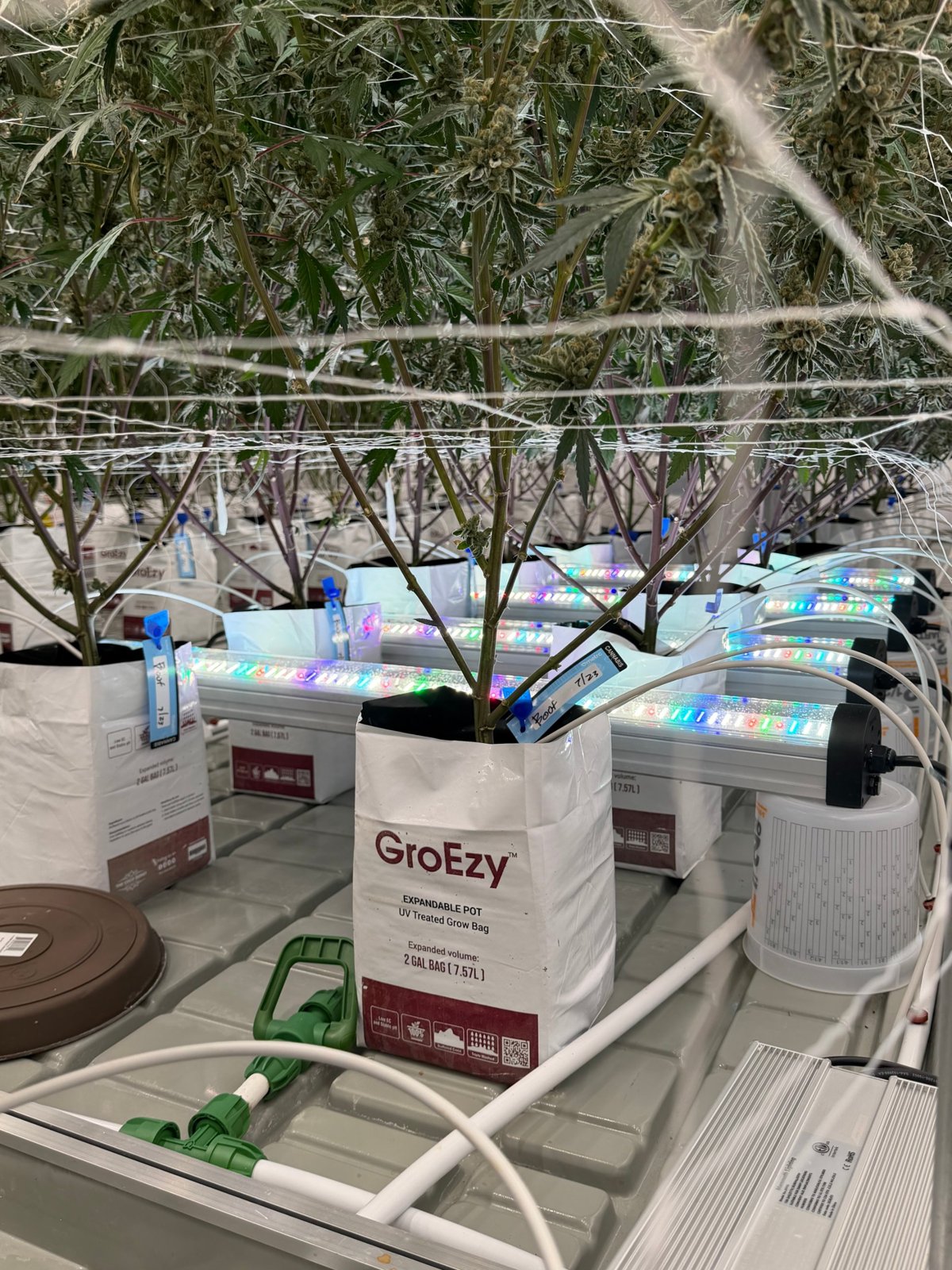
ANDREW: The under-canopy lights? A lot of people, including friends in the industry, are using them, and I didn't want to miss out on potential extra yield, whether fresh frozen or dry flower. I got a four-bar kit of under-canopy lights and I'm running it on the Superboof right now, because I have enough data on Superboof between dry and fresh frozen that when we harvest this batch I'll instantly see whether we got more yield.
But it's not as easy as ordering enough lights to fill every bench. You have to figure out the power and how many amps are being used. There's a big conversation around whether under-canopy lighting is worth the extra power consumption and everything else that goes into it. You're creating microclimates under the canopy, so you need more airflow, more fans, and HVAC tubes running under the canopy. We're watching how it affects temperatures and terps. We won't really know until we cut down the six plants and evaluate them, but I'm excited about it.
GREG: Are you seeing a change in power consumption yet?
ANDREW: It's hard to notice. It was a rough summer for the HVAC, and power consumption went through the roof.
GREG: Everything's going up.
ANDREW: Electricity is definitely a couple grand a month. That isn't huge compared to some of the bigger operations, but it's a lot for a small grow. Solar companies are hitting me up about reducing the cost of power, and I'm looking into everything.
GREG: I know there used to be big tax credits for that.
ANDREW: There was a rebate program for LEDs before we built out, and we got a big rebate on our lights. It took about 70% of the cost off. A $50,000 light order became something like $10,000–15,000. That program has changed now.
We want to expand down the line, but we have to think it through. We don't want downtime, and everything is in one room with the veg and the flowers. How do we do construction without interrupting the plants or bringing in contaminants and microbials? It's tough, but we're working through it.
GREG: What's the hardest part of your work that most people don't see?
ANDREW: Staying consistent day to day: keeping the batches consistent and maintaining quality from batch to batch. Everybody talks about the first batch and compares every batch after it to that one, but I don't think people understand how hard it is to replicate a run entirely from start to finish. So many factors go into the final output, and you can almost trace it back day by day.
We track all the data: environmentals, feed data, recipes. Everything lives in one place. There are so many factors behind the outcome of a harvest that it's hard to look at it and say why a strain didn't test the same as last time. Sure, they're plants and they do their thing, but it's not easy to stay consistent from start to finish. That's what we're striving for: the best quality we can put out on a batch-to-batch basis.
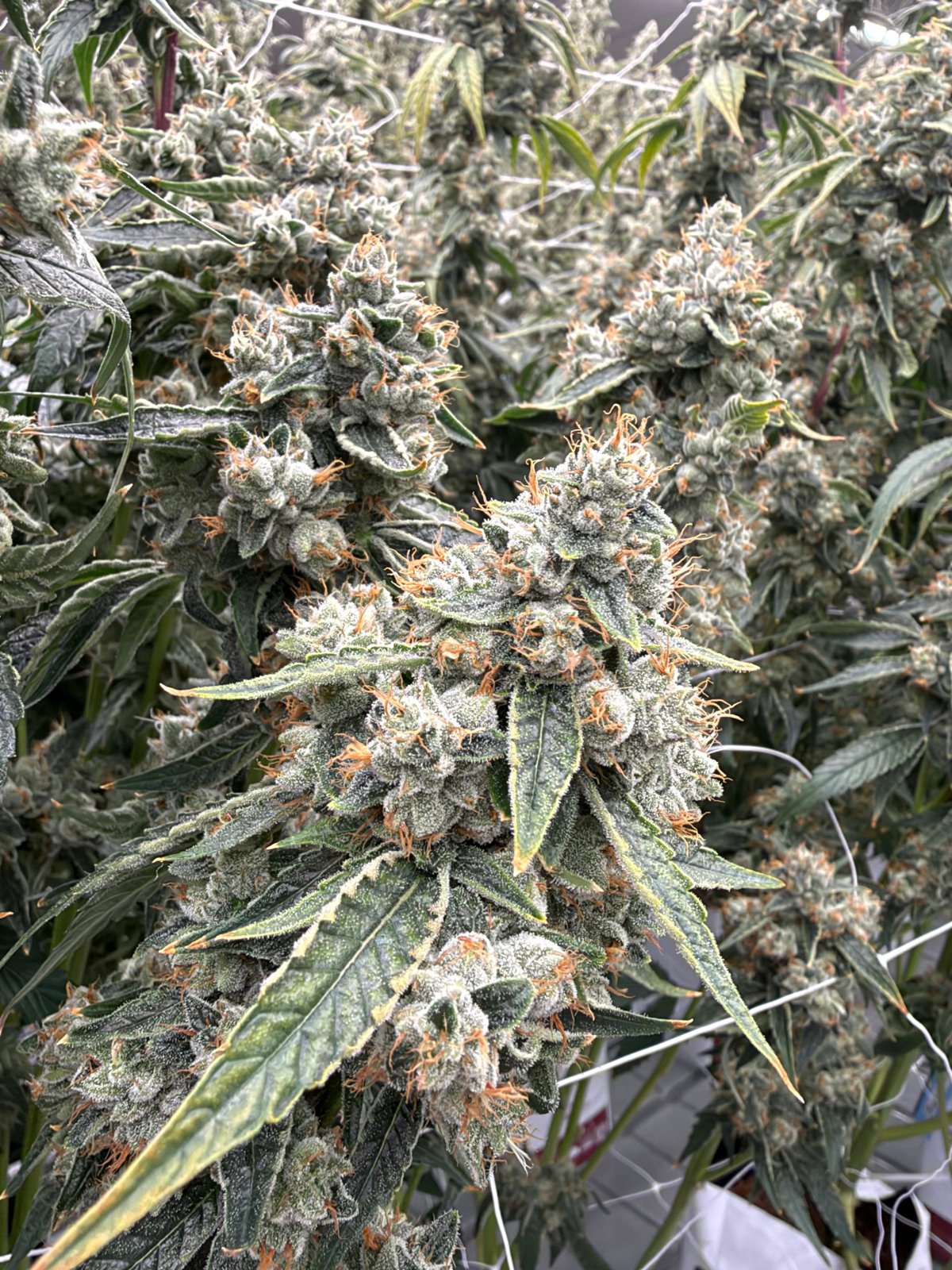
And if I'm not happy with it, I'm not putting it out. We don't compromise quality for the market or for money. We've had batches of strains like the Mule Fuel and Golden Goat that I held back from market because I wasn't comfortable with what was going into the jars compared to other strains, or compared to other times we'd jarred that strain. Sometimes I'm a little too picky, but I think you have to be if you want to maintain a certain quality standard.
GREG: To build a brand name.
ANDREW: Exactly.
GREG: So even at small scale, you're still holding product back.
ANDREW: Still holding back. If it means putting the product into joints or into smalls in Mylar bags, that's what I'll do. Even if it's 200 jars, I'm not putting out 200 jars of Mule Fuel if I'm not happy with how it looks and smells. Sometimes it's just jar appeal: if the nugs aren't fat, or they're a little goofy looking, I might hold it back. That's a business decision too. If one person isn't happy with what they got and goes yapping about it online, that's not a good look for us. Keeping everybody happy isn't easy, but you have to think about it when the brand is this small.
If we were one of those big MSOs, ten people complaining online about a bad jar wouldn't matter. They'd still see 3,000 transactions on their brand in a day. I rely on people coming back and boasting about how good the jar is, how loud and frosty it is. Everything has to check all the boxes every run.
GREG: What's one thing you wish customers or the public understood about what you do?
ANDREW: All the work that goes on behind the scenes, from start to finish, until that jar is purchased in a dispensary. The hours, labor, and time. People should appreciate how much care and time went into each jar. I'm packing each jar myself. I'm trying to get 2,000 jars out the door, so I'm in there early in the morning packing as much as I can and getting it out as fast as possible while still maintaining quality. It's the time investment.
GREG: Where do you see craft cannabis going in the next five years?
ANDREW: Craft will stick around, and I think it'll keep getting bigger. It's clearly the one niche able to survive in some of these saturated markets. Even in New Jersey, four years in, we don't have 100 growers yet. Craft will keep playing a big role for the connoisseurs who don't want to pay for $30 bad eighths from some of the MSOs.
GREG: I know Columbia Care, now The Cannabist, closed their facility. [In 2026, The Cannabist announced it would close its two New Jersey cultivation sites and lay off 86 workers.]
ANDREW: When costs and investment are that high, like putting $10 million into your grow and not seeing that come back in a year, that's tough to make back. And paying employees. There's so much overhead when your facility is that big. Whoever can stay small while putting out a lot of product at full tilt, and maintain quality over time, is clearly winning.
GREG: Anything else you want to tell people?
ANDREW: We're at day 55 or 56 right now, and it's looking like our best run yet, but it's never over until the jar. Even then it's not really over. People reach out about a batch from two batches ago asking what I thought about it.
It's not over until the product is tested and ready at the dispensary. We've got another week of flower until we chop, then two weeks of drying, then a couple of weeks of curing, burping, and trimming, and things can still go wrong in between. We watch out for PM and bud rot. We haven't dealt with any of that so far, knock on wood. But we're always scouting.
GREG: Because of that determination, you don't have those issues.
ANDREW: Right, and knowing how costly those can be. In these big facilities, bud rot is just another day at the job. They take it with the territory: "We're going to lose 10% of this crop to bud rot." I don't want to see a centimeter of bud rot anywhere, or anything resembling PM. The first time you came by, we had a little gnat pressure. That was when we first started, and we fully eradicated it and make sure we stay as clean as possible.
There are also things you can't even see: root pathogens, pythium, fusarium, HLVd. So we make sure everything we start with is clean. I'm not getting any cuts from California, and everything is tested, clean, and quarantined. When we start a new genetic, we make sure it's healthy before it comes into the garden. We're scouting, using digital microscopes, checking everything from start to finish, because these problems can happen and cause real issues. We saw a little pythium at one point. You don't see it until it affects the plant, and then you're like, this plant's got pythium.
There are so many factors. It's environmental, it's everything. It all comes together into either a perfect storm in a good way or a perfect storm in a bad way. I manage that from an overhead perspective and let my grower handle it day to day: temperatures, irrigation, CO2 levels. So many things go into it.
GREG: What's next for Genuine Grow?
ANDREW: More new strains and more rosin collabs, and maybe seeing what other SKUs we can do. We've been focused mostly on eighths and one-gram singles. We did pre-rolls from the first harvest, but I didn't really think about them until afterward. It's a great SKU. Somebody who doesn't want to pay $60 for an eighth but wants to try the brand, or has heard about the Bagel so much, can buy a one-gram single for $15–16, or $10–11 on sale. We see a lot of movement on pre-rolls now, and I just launched the five-packs.
Your heady smokers aren't buying pre-rolls. They're buying hash holes, or they roll their own. But pre-rolls are great for people willing to spend a couple extra bucks for a higher-quality pre-roll. No one wants the $4 pre-roll unless they really don't care what they're smoking, but a Genuine Grow customer would be fine paying extra for a Genuine Grow pre-roll compared to an MSO one.
Every now and then I drop a few batches of smalls, taking the leftover A and B buds I didn't want to pack into jars and putting them in Mylars. People love smalls. They can get a quarter of smalls for about $20 more than an eighth. The bud is relatively the same, it just doesn't have the same jar appeal. It still moves well, and it's another SKU to get out there.
So what's next for Genuine Grow: keep building, stay focused on quality, keep our heads down, and not worry about the outside noise and competition.
GREG: If somebody wants to buy your product today, where would they go?
ANDREW: It depends where they are. We're at a couple of stores in South Jersey, but we're mostly spread across North Jersey, in about 12 to 14 stores depending on the product: Blue Oak (Bloomfield), The Hashery (Hackensack), SoulFlora (Newfoundland), A21 (Scotch Plains), The Social Leaf (South Toms River), Scarlet Reserve Room (Englishtown), Cottonmouth (Runnemede), Nirvana (Saddle Brook and Mount Laurel), Boone Town Provisions (Boonton), and Blue Violets (Hoboken). I'm probably missing a couple, so apologies.
Where to find Genuine Grow (also now at Doobiez up north, Pink Balloon by the Shore and ReLeaf in South Jersey)
| Store | Town | Region |
|---|---|---|
| Blue Oak | Bloomfield | North Jersey |
| The Hashery | Hackensack | North Jersey |
| Nirvana | Saddle Brook | North Jersey |
| SoulFlora | Newfoundland | North Jersey |
| Doobiez | West Milford | North Jersey |
| Boone Town Provisions | Boonton | North Jersey |
| Blue Violets | Hoboken | North Jersey |
| A21 | Scotch Plains | North Jersey |
| Scarlet Reserve Room | Englishtown | Central Jersey and the Shore |
| Pink Balloon | Neptune | Central Jersey and the Shore |
| The Social Leaf | South Toms River | Central Jersey and the Shore |
| Nirvana | Mount Laurel | South Jersey |
| Cottonmouth | Runnemede | South Jersey |
| ReLeaf | Williamstown | South Jersey |
GREG: Excellent. I'm going to check out some product. Appreciate you giving me the time.
ANDREW: Glad we could do it.
Sources
- NJBIZ: Cannabist to lay off 86, exit New Jersey cannabis market
- Cannabis Business Times: Cannabist closing 2 New Jersey cultivation sites, laying off 86 workers
- Harvest Works Farm on Instagram
- Brookside Reserve on Instagram
- Bloom Seed Co
- NJ CRC: SoulFlora license
- NJ CRC: A21 Health & Wellness license
- NJ CRC: Cottonmouth Dispensary license
- NJ CRC: Hashery license
- NJ CRC: Nirvana Dispensary (Mount Laurel) license
- NJ CRC: Nirvana Dispensary (Saddle Brook) license
- NJ CRC: Boone Town Provisions license
- NJ CRC: The Social Leaf license
- NJ CRC: Scarlet Reserve Room license
- ROI-NJ: Blue Oak Dispensary launches in Bloomfield
- Jersey Digs: Hoboken approves Blue Violets
- NJ CRC: Doobiez license
- NJ CRC: Pink Balloon license
- NJ CRC: ReLeaf Cannabis license