Empire Runs on Hemp: 1500 to 1900
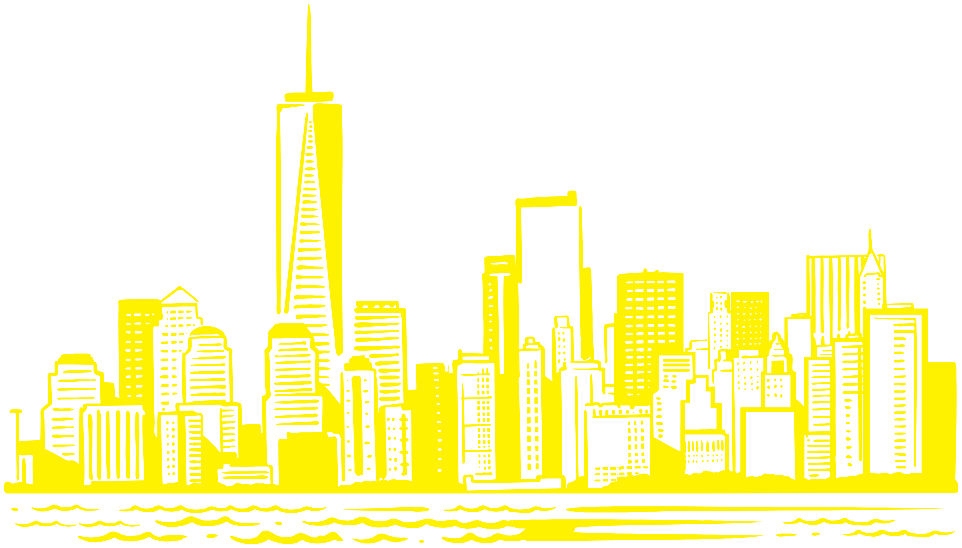
For four hundred years, navies ran on hemp rope while empires carried the plant, and the laws against it, around the world; this is Part 3 of 6 in "Cannabis Through the Ages."
If you want to understand why governments got so intense about cannabis in the 20th century, look at how much they depended on it before that. For four hundred years, European empires needed hemp the way modern militaries need fuel. No hemp, no rope. No rope, no navy. At the same time, those empires were moving people, plants and habits across oceans. Their scientists gave the plant the names we still use, and by the 1800s Western doctors had "discovered" cannabis as medicine, even though half the world had been using it for centuries.
The navy needed rope
In 1533, Henry VIII ordered English farmers to sow a quarter acre of hemp or flax for every 60 acres they tilled. The reason was rope for the navy. Elizabeth I repeated the order in 1563. Farmers resisted it. Land was scarce, the crop didn't pay even with bounties, and retting hemp, soaking the stalks until the fiber loosens, was smelly, miserable work.
The scale of demand was enormous. The Royal Navy's dockyard at Chatham has been making rope since 1618, and its Double Ropehouse, built between 1786 and 1791, runs more than 1,100 feet. A single first-rate ship of the line needed about 31 miles of rope, more than 20 of it for rigging.
Most of that hemp didn't come from England. It came from Russia. The Hash Marihuana & Hemp Museum puts Russia's share of Europe's hemp at 80% or more around 1740, and says Britain took about 90% of its hemp from Russia in the late 1700s, though it doesn't cite its sources. Historian J.P. Davey writes that Britain's dependence on Russian hemp grew increasingly shaky, and that in 1800 the tsar halted hemp shipments to Britain outright, forcing London to look for new sources across its empire.
America was hooked on Russian hemp too. A Boston University study of the trade calls cordage "the ligaments and nerves of the sailing ship," and notes that American-grown hemp rotted in salt water, so most American ships rigged with Russian rope. In the summer of 1811, about 100 American-flagged ships were reportedly docked at Kronstadt at once. The same study argues that Russia's loose enforcement against that trade helped push Napoleon toward invading Russia in 1812. You'll often hear that Napoleon invaded Russia over hemp. That's a big simplification of one historian's argument.
Spain had the same problem. In June 1545, according to historian Isaac Campos, the Spanish Crown first ordered cannabis, meaning hemp, sown in the New World. Spain valued it for clothing, rope and sails. Chile's Quillota Valley was growing it for fiber by 1545. A conquistador named Pedro Cuadrado claimed he'd been the first to grow cannabis in the Americas, in Mexico around 1530, and Campos thinks the claim is probably true. Chile became the lasting success, and Mexico's hemp farming declined after independence when Spanish subsidies ended.
Europeans meet bhang, and name the plant
While English farmers grumbled about hemp quotas, European travelers in Asia were running into the drug side of the plant for the first time.
On April 10, 1563, a Portuguese Jewish physician named Garcia de Orta published his Colóquios in Goa, a book of 57 dialogues on Indian drugs that includes a chapter on "bangue." He named Bahadur Shah, the sultan of Gujarat, as a user, said many Portuguese used it too, and argued that the Indian plant wasn't the same as European hemp. In 1596, the Dutch traveler Jan Huyghen van Linschoten wrote three pages on bangue. In northern India, a review of the memoirs of the Mughal emperor Babur notes that his wine parties also served maajun, a sweet the reviewer describes as made from crushed bhang, milk, sugar and spices.
In the Dutch East Indies, the naturalist Georg Rumphius finished his Herbarium Amboinense around 1690, though the East India Company held it back until 1704 and it wasn't published until 1741 to 1750. Its fifth volume describes cannabis as "Ginji" and covers how locals smoked it with tobacco, made it into a sweet and brewed the leaves as tea.
Then the scientists gave it names. In 1753, the botanist Linnaeus classified the species as Cannabis sativa, meaning "cultivated." In 1785, the naturalist Lamarck named a second species, Cannabis indica, "of India," from specimens collected there. Every dispensary menu that says sativa or indica is using 18th-century botany.
The American founders grew hemp, not weed
In August 1619, Virginia's first General Assembly told every householder who had English or Indian hemp seed to try planting it the next season. You'll often read that Virginia forced planters to grow hemp under penalty. The actual law only asked people who already had seed to try it. The penalty was in a separate clause about silk flax. Puritans were growing hemp in New England by 1645.
George Washington thought about making hemp a cash crop in the 1760s, chose wheat instead, and then grew hemp on all five Mount Vernon farms for his own needs: rope, sail canvas, thread for sacks and repairs to his fishing nets. Mount Vernon is blunt that this was fiber hemp, not marijuana. Thomas Jefferson's Monticello planned for about 400 pounds of hemp a year to clothe enslaved workers, and Jefferson rigged up machines to break the fiber faster. Virginia even accepted hemp for taxes starting in 1779.
And no, the Declaration of Independence isn't on hemp paper. Jefferson's draft is on ordinary paper, probably Dutch, and the signed copy is on parchment, which is animal skin.
Kentucky became the center of American hemp. Archibald McNeill grew the state's first crop near Danville in 1775. By 1850, Kentucky's output peaked at about 40,000 tons, worth roughly $5 million, and hemp was the state's biggest cash crop until 1915. It's worth saying plainly what made that possible: hemp was grown in the Bluegrass counties with the largest enslaved populations because the work was brutal. The Civil War, the loss of enslaved labor after emancipation and cheap imported jute sent the industry into decline.
The plant crosses oceans
While Europeans were growing hemp for rope, the drug side of the plant was spreading through the same trade networks.
In southern Africa, cannabis was already established. By about 1550 in what's now Lesotho, the Koena traded cannabis to San groups in exchange for land. From at least the 1580s, southern Africans used it to suppress appetite, which some researchers have tentatively linked to a local strain high in THCV. In 1658, Jan van Riebeeck, who ran the Dutch East India Company's Cape colony, recorded Khoi people smoking it in his journal. That's the first written record of dagga in South Africa. In 1680, the Company banned settlers from growing it so it could control the trade, then lifted the ban in 1700 because wild plants left little profit in the monopoly.
In Brazil, the plant went by names like diamba and pango, and how it arrived is still debated. Some sources say the Portuguese brought it. Others link it to enslaved Africans who already knew it, though the commonly repeated "1549" date is disputed. What's clear is the first ban. In 1830, Rio de Janeiro's municipal council outlawed selling and using "pito do pango." Sellers paid a fine. Enslaved people caught using it got three days in jail. It's one of the earliest cannabis bans in the Americas, and it was written for a specific population.
In the Caribbean, the plant arrived with Indian indentured workers. After slavery ended, Britain shipped about 430,000 Indian laborers to Caribbean plantations between 1838 and 1917, starting with Guyana in 1838 and Trinidad and Jamaica in 1845. They brought ganja, the word, and the culture of bhang and smoking. Jamaica imported ganja through licensed businesses in the 1850s and 1860s to supply them. In Trinidad, a newspaper history drawing on historian Gerry Besson says ganja passed through Customs like any other good and was sold at estate shops, seen as gentler on workers than rough estate rum.
The backlash started early. British Guiana began regulating ganja sales in 1861. In Trinidad, officials blamed ganja for insanity and for the 1884 Hosay disturbances in San Fernando, and passed an ordinance in 1885. A full prohibition there in 1894 was repealed in 1899. In South Africa's Natal colony, Indian indentured workers arrived from 1860, and an 1870 law banned them specifically from using or trading cannabis.
In Mexico, herb sellers in the 1770s were selling it as pipiltzintzintlis, roughly "the most noble princes," and the Inquisition banned its use for divination without realizing it was cannabis. By the 1850s Mexican botanists were writing down the names rosa maría and mariguana, and that word spread across the hemisphere. Isaac Campos found more than 400 Mexican newspaper articles from this era, and none questioned the idea that marijuana made people violent and mad. One 1908 commentary claimed people crossed themselves at the mere mention of the plant.
Napoleon didn't ban hashish
The French encounter with hashish came through war. In October 1800, during France's occupation of Egypt, General Jacques-François Menou banned producing, selling and using hashish, closed the cafés that served it, and set three-month jail terms. It's often called Napoleon's ban. Bonaparte had already left Egypt in 1799. The order was Menou's, and it applied to soldiers in Egypt, not to France.
The soldiers brought the habit home anyway. In the 1840s, the psychiatrist Jacques-Joseph Moreau de Tours, who had studied hashish in Egypt and Syria, published his book on hashish and mental illness in 1845. Around the same time, a group called the Club des Hashischins met monthly at the Hôtel Pimodan in Paris. Members ate dawamesk, a paste of cannabis resin, fat, honey and pistachio. Gautier, Baudelaire, Nerval and Delacroix were in the room, with Balzac, Hugo and Flaubert listed as occasional visitors. Baudelaire published his book on opium and hashish, Les paradis artificiels, in 1860.
Back in Egypt, the Ottomans ordered all hashish destroyed in 1877, Egypt banned imports in 1879, and cultivation was banned in 1884. Coffee-house raids and burned fields followed. Much of the hashish being smuggled into Egypt came from Greece, where cannabis growing took off in the 1870s, especially in Arcadia. In treaty talks in 1884, 1895 and 1906, Egypt pressed Greece to ban hemp in exchange for lower duties on Greek tobacco. Greece taxed the crop and banned exports to Egypt, but didn't ban cultivation until 1920. In Morocco, Sultan Hassan I put rules on the trade in 1890 but gave several Rif tribes the right to keep growing.
The British taxed it in India and then studied it
The British in India didn't ban cannabis. They taxed it. A law in 1798 put duties on bhang, ganja and charas. In 1854, Bengal limited ganja growing to a defined area near Rajshahi under the excise department, a tract that became known as the Ganja Mahal. Between 1873 and 1893, ganja taxes brought the Bengal government about Rs 1 crore.
Then came the most serious government study of cannabis in the 19th century. In 1893, under pressure from a British MP who'd read a report linking ganja to asylum patients, the Indian Hemp Drugs Commission began work. It heard from 1,193 people at 86 meetings in 30 cities and produced a report thousands of pages long. Its conclusion: moderate use was the norm and did practically no harm, excessive use was rare, and banning cannabis was neither necessary nor wise. It recommended taxing and licensing instead.
That report gets quoted a lot as saying cannabis is harmless. It didn't say that. It said moderate use was harmless and excessive use was harmful. The difference matters.
The West discovers cannabis medicine
In September 1839 in Calcutta, the Irish doctor William O'Shaughnessy treated a baby with severe seizures using cannabis tincture and reported recovery. He gave a large supply to Squire of Oxford Street in London, who made extract available to hospital doctors. Cannabis medicine spread from there across Britain, Europe and North America. In 1890, the physician J. Russell Reynolds wrote in The Lancet that pure, carefully dosed cannabis was one of the most valuable medicines available.
You'll read that Reynolds prescribed it to Queen Victoria for menstrual cramps. There's no primary evidence for that, and historian Virginia Berridge says so directly.
In the United States, cannabis extract entered the US Pharmacopeia in 1850. People mostly took it as a liquid, not smoked, and the medical supply was largely imported from India because American hemp was bred for rope. Tilden & Co., with an extract factory in New Lebanon, New York, sold it for home use, and cannabis extract ads kept running in Northern newspapers through the Civil War. In 1863, the Philadelphia diarist Sidney George Fisher took an Indian hemp medicine for his gout.
Cannabis ended up inside a lot of bottles. Piso's Cure for Consumption, launched in Warren, Pennsylvania, in 1864, kept cannabis, chloroform and alcohol in its formula after dropping opium and morphine. Chlorodyne, a British patent medicine invented by an army doctor in India named John Collis Browne, mixed laudanum, cannabis tincture and chloroform. According to a Smithsonian collection record, by the late 1890s the drug companies Parke-Davis and Eli Lilly were growing cannabis in the United States for extracts.
The writers came first, though. In April 1854, the travel writer Bayard Taylor published an account in Putnam's Monthly of eating hashish in a Damascus hotel. He and two friends each took a spoonful, felt nothing, took more, and then he felt his body expand, saw himself on top of a pyramid made of tobacco, and spiraled into terror before sleeping for about thirty hours. His advice was not to overdo it.
A young New Yorker named Fitz Hugh Ludlow read Taylor's story and went looking for the drug himself. In 1857, Harper & Bros. published his book The Hasheesh Eater. New York had a hashish candy, too, sold by the Gunjah Wallah Co. on Broadway in 1862. Part 6 tells that story.
The Sons of Hemp
One of the strangest stories of the era comes from central Africa. Around 1870, in the Kasai region of what's now the Democratic Republic of Congo, a civil war among the Luba and Lulua gave rise to a hemp-smoking movement whose followers were called the Bena-Riamba, the "Sons of Hemp." European explorers reported that followers treated fellow smokers as friends, kept weapons out of villages, stopped witchcraft trials, met at night to smoke together, and planted large hemp fields. A chief called Kalamba combined the movement's networks with firearms to become the leading Lulua power by 1875. The German explorers Pogge and Wissmann stayed with him in the early 1880s.
Those descriptions come from European explorers working for King Leopold II's Congo Free State, so they're colonial accounts, not neutral records. But they show cannabis being used as social glue on a scale nobody in Europe had imagined.
What Part 3 tells us
That pattern is about to go global. Tomorrow, in Part 4, the prohibition century begins.
Sources
- Pepys Diary: Henry VIII's and Elizabeth I's hemp orders (1533, 1563)
- Chatham Historic Dockyard: Master Ropemakers and the Double Ropehouse
- J.P. Davey, University of Exeter: Britain, Russian hemp and the 1800 halt
- Boston University: study of the American-Russian hemp trade
- Isaac Campos, Home Grown (UNC Press excerpt): Spain's 1545 hemp order and Pedro Cuadrado
- Wikipedia: Cannabis in Chile
- Wikipedia: Cannabis in Mexico (hemp farming after independence)
- Wikipedia: Colloquies on the Simples and Drugs of India (Garcia de Orta, 1563)
- Wikipedia: Bhang (Garcia de Orta and Linschoten)
- Asian Studies review of the Baburnama (maajun at Babur's wine parties)
- Wikipedia: Georg Eberhard Rumphius and the Herbarium Amboinense
- Wikipedia: Cannabis sativa (Linnaeus, 1753)
- Wikipedia: Cannabis indica (Lamarck, 1785)
- Online Library of Liberty: 1619 laws of Virginia's first General Assembly
- Wikipedia: Hemp (Puritans growing hemp in New England, 1645)
- Mount Vernon: George Washington grew hemp
- Monticello: hemp
- Monticello: paper of the Declaration of Independence
- Kentucky Historical Society: Kentucky hemp, McNeill and the 1850 peak
- Wikipedia: Cannabis in Lesotho (Koena trade, c. 1550)
- Duvall 2019, EchoGéo: cannabis in Africa
- Grocott's Mail: van Riebeeck's 1658 journal and South Africa's hidden cannabis history (2011)
- Wikipedia: Cannabis in South Africa (1680 Company ban, 1870 Natal law)
- ANPUH conference paper: Rio de Janeiro's 1830 "pito do pango" ban (2019)
- Points: cannabis and heroin in the Atlantic world, Indian indentured workers in the Caribbean
- Wikipedia: Cannabis in Jamaica (licensed ganja imports)
- Trinidad Express: history of ganja use in Trinidad
- Isaac Campos, on cannabis in New Spain and Mexico (Paternalism and O'Shaughnessy's)
- Points: the real history of France's first anti-drug law (Menou, 1800)
- World in Paris: Club des Haschischins and Moreau de Tours
- Wikipedia: Club des Hashischins
- Kozma, Journal of Levantine Studies: criminalization of hashish in the Middle East
- EFA / Gkotsinas: Greek hemp, Egyptian hashish and the treaty talks
- Wikipedia: Cannabis in Morocco (Sultan Hassan I, 1890)
- Scroll.in: the Indian Hemp Drugs Commission and British India's 1798 duties
- Points: Bengal's 1854 ganja tract near Rajshahi
- Wikipedia: Indian Hemp Drugs Commission
- The Wire Science: O'Shaughnessy's 1839 Calcutta paper
- RTÉ Brainstorm: the 200-year history of Ireland and medicinal cannabis (2018)
- Transform Drug Policy Foundation: cannabis timeline (2020), J. Russell Reynolds in The Lancet
- News-Miner: the curious case of cannabis and Queen Victoria
- Cannabis Science & Technology: cannabis and the US Pharmacopeia
- National Museum of Civil War Medicine: Tilden's extract
- FOHBC (Sullivan): Piso's Cure for Consumption
- Wikipedia: Chlorodyne
- Smithsonian National Museum of American History: Parke-Davis cannabis fluid extract bottle
- Schaffer Library: Bayard Taylor, "The Vision of Hasheesh" (Putnam's, April 1854)
- Wikipedia: Fitz Hugh Ludlow
- Public Domain Review: The Hasheesh Eater (1857)
- Points: Gunjah Wallah Co.'s hashish candy and enhanced confections
- Encyclopaedia Africana: the Bena-Riamba "Sons of Hemp" in Kasai
- Reclus, Africa vol. 3: Pogge, Wissmann and Kalamba